
I’d go slower on this one than most owners do. Junior tasks are the first ones owners hand to AI, because they look like cheap labour with a typo rate. I’d call them your training ground. The person who did them badly for two years is the senior your clients trust in year five, which is the real cost of cutting AI entry-level jobs first. Hand every one of them to the machine and you’ve cancelled a pipeline.
Canadian firms are already adjusting how they staff for this. Statistics Canada found that 44.4% of businesses using AI changed their training or staffing practices because of it, and about a third trained existing employees. The people doing the work got there first. In Alberta, 21% of workers used generative AI in their main job in the year to July 2025, close to the 22% national rate.
Picture the strongest senior person in your firm, the one clients ask for by name, the senior your team is really watching. Now ask where they learned to do what they do. It did not come from a course or a manual. It came from years of the dull work at the bottom of the pile. First drafts, first calls, first walk-throughs, each one read by someone senior and sent back with the errors marked. That pile is where AI earns its easiest hours, which is why it is the first pile owners give away.
What did the junior work actually teach?
It taught judgment, one cheap mistake at a time. A junior who writes forty first drafts learns what a good draft looks like by producing thirty-nine that miss. A junior who sits in on fifty client calls learns which sentence in a letter starts a fight.
The work looked like labour. Underneath, it was a school that paid for itself, because the errors were caught by a reviewer before they reached a client.
Nobody learns judgment from watching finished work. They learn it from work that got sent back.
What happens when the rung goes missing?
For two or three years, nothing you can see. The savings are real and the work still gets done. Then a senior retires, or leaves, or burns out, and you look down the bench for the person who has been getting ready.
The bench is empty. The people below the seniors are willing, and they have tool skills, and they have never been made to produce the work the slow way, so the judgment the senior carried was never built in them.
So you hire experience at the market price, in a market where every firm that made the same decision is bidding beside you. Rented experience can do the tasks. It does not know your clients, your standards, or the reasons your firm does things its way, and it renegotiates its price every year. Run your own clock forward five years and price that hire honestly. The saving on junior hours is the smaller number.
A senior you did not train is a senior you rent, and rent gets renegotiated every year.
Does that mean keeping juniors off the tools?
No. A junior trained without AI is trained for a workplace that no longer exists. The tools are part of the trade now, and the hiring order follows from it. Hire for judgment, then teach AI. The tools in junior hands are fine. I’d hire that way every time.
What fails is giving the machine every task that used to teach, then leaving the junior alone with the output. Left to grade their own homework, a junior learns to ship the average at speed, and calls it learning because nobody showed them better.
The tools belong in a junior’s hands. So does one hard task the tool is not allowed to finish.
How do you rebuild one task as training?
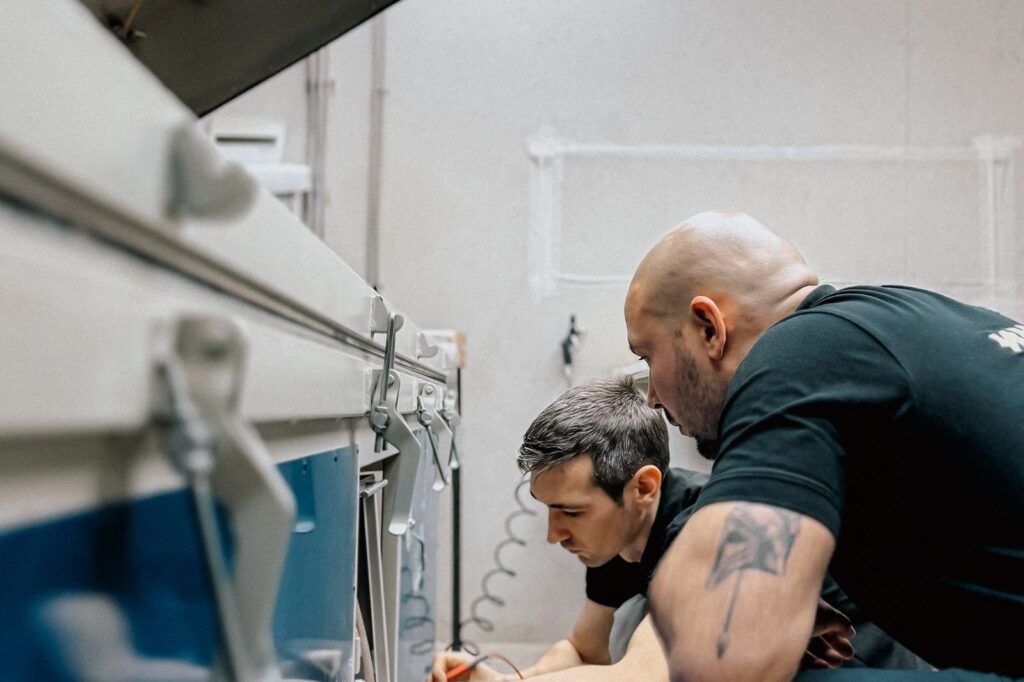
Pick the task that used to teach the most, and put a fence around that one. The junior does the first pass themselves, before the tool opens. A senior reviews it against the standard and explains the marks out loud, not in a comment thread.
Then the tool can check, tidy, and speed up the rest, with the junior watching what it changes and why. Rotate the fenced task every few months so the teaching spreads across the trade instead of pooling in one corner. Everything else on the junior pile stays with the AI, where it belongs. Keep the list of fenced tasks on one page where the whole team can see it, so nobody has to guess which work is practice and which work is production.
A training task is not busywork kept for old time’s sake. It is a rep with a coach attached.
Which junior task should you rebuild first?
Take the junior task your firm handed to AI most recently, the one a senior used to learn from. Rebuild it as a training task with a named reviewer and a weekly slot, and leave every other task on the pile with the machine.
One rung, rebuilt on purpose, is enough to restart the pipeline. If you want the design done across the whole team, my AI training workshops build the ladder and the tool habits together, on your real work.
Short answers on AI entry-level jobs
Should junior staff use AI tools?
Yes. A junior trained without AI is trained for a workplace that no longer exists. What fails is handing the machine every task that used to teach and leaving the junior alone with the output. Keep one hard task the junior does by hand first, with a senior reviewing it.
What is the risk of giving all junior work to AI?
You save junior hours now and lose your senior pipeline later. The dull first drafts and first calls are where people build judgment, one reviewed mistake at a time. Remove all of them and in a few years you rent experience at market price instead of growing it.
Which junior task did your firm hand to AI most recently? That’s the one I’d rebuild first, and I get into trade-offs like it weekly in the AI Newsletter with ZAK.

3 Comments