

Most leadership teams agree AI matters. Fewer agree on what to do on Monday. That’s the opening line of my FLIP workshop guide, and it’s the whole reason this AI readiness workshop exists.
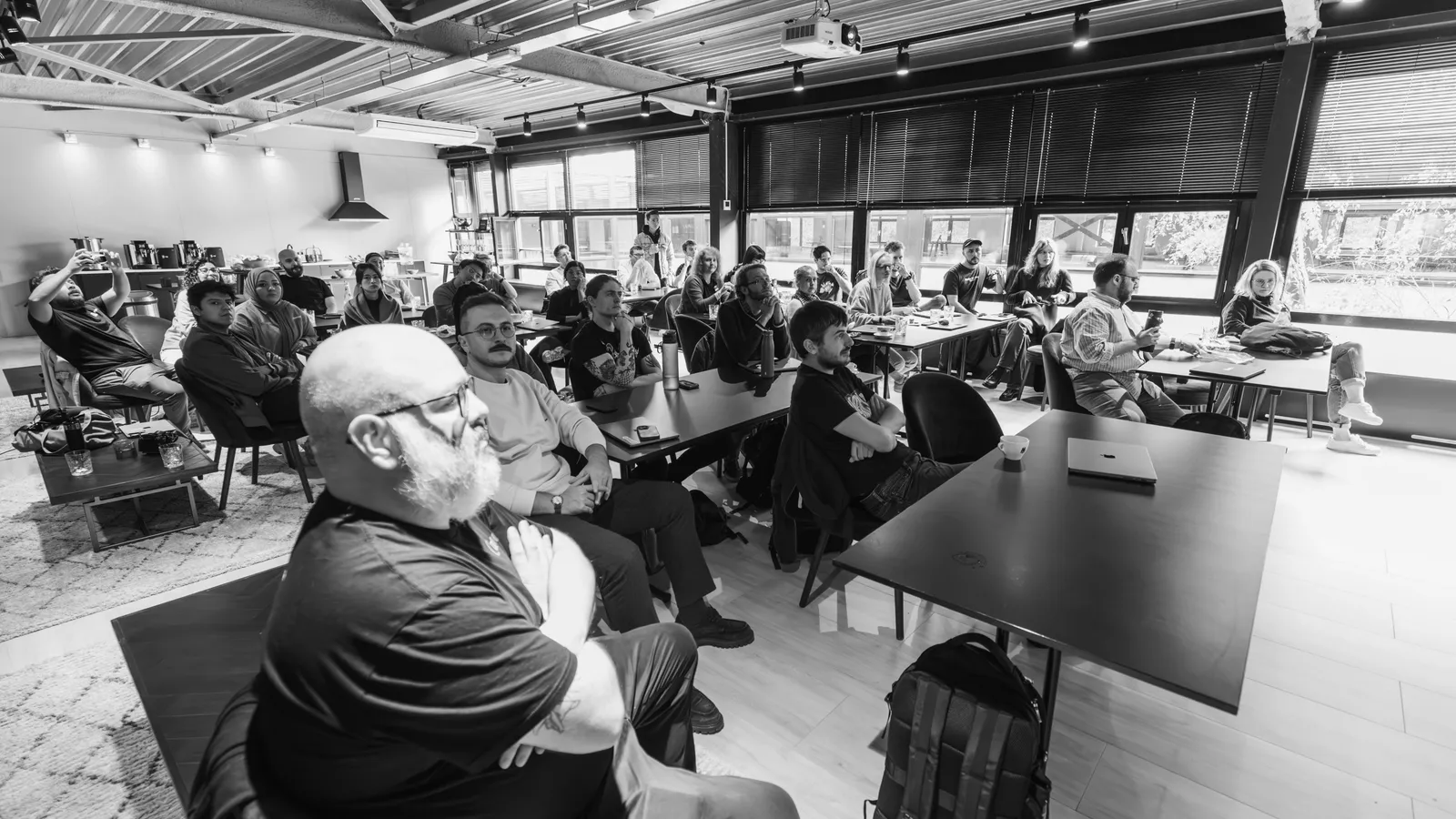
An AI readiness workshop doesn’t need a vendor or a slide deck. It needs five to 12 leaders, a whiteboard, a timer, sticky notes and a printed FLIP scorecard for each person. The facilitator guide is free. Here’s how the hour runs.
Who should be in the room?
Five to 12 leaders who each own part of the business. The owner or CEO, finance, operations and department heads. Keep it to people who can commit time and money, because the hour ends with one owner and one date, and someone in the room has to be able to say yes.
It works in person or on a call. On a call, have everyone type their four numbers into the chat at the same moment, so nobody adjusts after seeing the boss’s score.
How does an AI readiness workshop run?
Six blocks in 60 minutes. A short open, ten minutes of silent scoring, a reveal on the board, an evidence check, a few minutes to name the gap and five minutes to pick one next step. The time is tight on purpose, so the room decides instead of debating.
| Minutes | Block | What happens |
|---|---|---|
| 0 to 5 | Open | Say why you’re here in under two minutes, then name the four pillars once |
| 5 to 15 | Silent scoring | Everyone scores alone, no talking, four subtotals on one sticky note |
| 15 to 30 | Reveal | Plot every score on a 2 by 2 grid with the average and range |
| 30 to 45 | Evidence | Ask the highest scorer in each pillar for proof |
| 45 to 55 | Find the gap | Name the pattern on the board |
| 55 to 60 | One next step | One pillar, one owner, one date |
What makes the evidence block work?
One plain question per pillar, asked to the highest scorer, about three minutes each. Show me a workflow someone ran with AI this week. Name one number that moved because of AI. If nobody can show it, the group lowers that score on the board and moves on.
Don’t argue about it. Lower the number and keep going. The other two questions are just as plain. For Literacy, ask what data you’d never put into an AI tool, and check that everyone gives the same answer. For Preparedness, ask who owns it if an AI tool or agent makes a costly mistake tomorrow.
If the answer to that last one is a shrug, you’ve probably found your pillar. It isn’t theoretical. In Moffatt v. Air Canada, a BC tribunal held the airline responsible for what its website chatbot told a customer.
What does the reveal tell you?
Two things. The lowest average shows where the business is weakest. The widest range shows where your leaders disagree. A range of 10 points or more on one pillar means your leaders see the business differently, and that’s worth as much as the low score.
Circle the lowest average and star the widest range. Then ask the room which gap surprised them most. The four patterns, and what each asks you to fix first, are in the FLIP Framework overview.
How do you pick one next step?
Pick one pillar for the next 30 days. Only one. A two-week practice sprint for Fluency, a leadership briefing and a never-paste data list for Literacy, one workflow measured before and after for Impact, or a one-page policy and a named owner for Preparedness.
Write three things on the board before anyone leaves: the owner, the done-by date and the rescore date. Without the date you’ve had a good conversation. With it you have a plan.
As a hypothetical example, a Calgary engineering firm might leave with Impact as its pillar. One proposal workflow gets timed this week, run with AI for 30 days, then reported at the next partners’ meeting.
Pair the hour with AI training for staff on real work, so the people doing the work build the habit too. If you want me to run it for your team, that’s an Executive AI Workshop.
AI readiness workshop, the questions leaders ask
Can we run the FLIP workshop without an outside facilitator?
Yes. The free facilitator guide gives you the opening script, the timings and the evidence questions. Pick someone who can keep time and stop debates. The owner can run it, but have everyone score silently first so nobody copies the boss.
Does the workshop work on a video call?
Yes. Use a shared screen as the whiteboard. During silent scoring, have everyone type their four pillar subtotals into the chat at the same moment, so nobody changes their numbers after seeing someone else’s. The rest of the hour runs the same.
What do we do after the workshop?
Work the one pillar you picked for 30 days, then rescore it. At your next leadership meeting, ask where you were overconfident, where you disagreed most and what changes in next quarter’s plan. Then pick the next pillar.
Book one hour with your leaders this month. The AI Newsletter with ZAK brings the next move every Friday.